+86-750-3598205


Choosing the right Led Extrusion in 2026 requires more than comparing prices or profile photographs. Global buyers must evaluate aluminum alloy, wall thickness, diffuser performance, heat dissipation, sealing, and installation method. A profile used under a kitchen cabinet may need a different structure from one installed outdoors, inside a retail shelf, or across a long architectural ceiling.
Details matter.
Lighting engineer James R. Benya offers a useful principle: “Lighting quality matters more than lighting quantity.” That idea applies directly to Led Extrusion selection. A bright strip can still create dark spots, visible LED dots, or excessive heat when the profile is poorly matched. Experienced buyers should request photometric data, compatible strip specifications, surface-finish samples, and clear tolerance information. They should also confirm whether the supplier can maintain consistent anodizing across large production batches.
This guide examines the best Led Extrusion types for global buyers, including recessed, surface-mounted, corner, suspended, waterproof, and plaster-in profiles. It compares their practical strengths, limitations, and suitable applications. Installation access, diffuser opacity, connector space, and shipping protection also deserve attention. Small mistakes become expensive when thousands of meters are involved.
No single profile is best for every project. That is easy to forget. A premium extrusion may still fail when the strip, power supply, or mounting surface is unsuitable. Buyers should test a complete assembly before approving mass production. Regional safety requirements and project conditions must also be reviewed by qualified professionals. This approach supports better performance, more reliable sourcing, and fewer costly surprises in international LED projects.
2026 Best LED Extrusion Types for Global Buyers?
LED Extrusions Explained: Purpose, Structure, and Core Applications
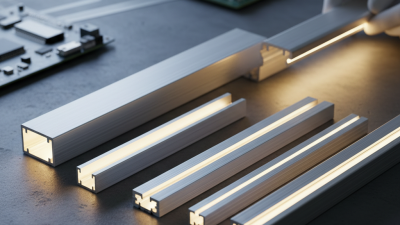
An LED extrusion is an aluminum profile that houses and protects flexible LED strips. Its structure usually includes a channel, diffuser, end caps, and mounting clips. The aluminum body transfers heat away from the strip, helping maintain light output and service life. The diffuser softens bright points and creates a cleaner line of light. This matters as LED adoption expands. The International Energy Agency reported that LEDs represented about half of global lighting sales in 2022. Yet, an extrusion is not automatically a thermal solution. Poor contact, weak airflow, or an unsuitable diffuser can still cause performance problems.
Core applications include kitchen cabinets, retail shelves, stairways, offices, hotels, and outdoor architectural details. Recessed profiles disappear into ceilings or furniture, while surface-mounted types simplify installation. Corner profiles direct light toward walls or display surfaces. IP-rated designs can support sheltered outdoor areas, but ratings must match the installation conditions. Grand View Research valued the global LED lighting market at approximately USD 78.2 billion in 2022, showing why consistent optical and mechanical quality matters to international buyers.
Tips: Check strip width, wattage, diffuser transmission, and heat dissipation together. Ask for thermal test data, not only attractive product photos. Confirm aluminum alloy, wall thickness, IP testing, and installation instructions. I still see projects choosing the cheapest profile first. That decision can create visible dots, difficult maintenance, or premature dimming. A small sample test under real mounting conditions is wiser.
LED Extrusions Explained: Purpose, Structure, and Core Applications
The chart compares representative profile-depth midpoints commonly used in aluminum LED extrusion configurations. Surface-mounted and recessed profiles suit general architectural lighting, while corner, pendant, and floor/walk-over profiles require deeper structures for directional control, suspension, or mechanical protection. Actual dimensions vary by strip width, diffuser, heat dissipation, and installation requirements.
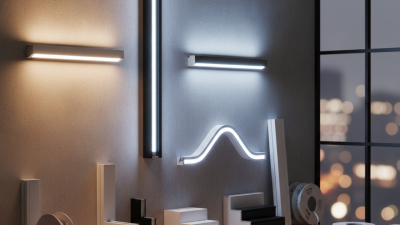
LED extrusions are classified by shape, material, and installation method. Each choice affects light distribution, heat control, and maintenance. Surface-mounted profiles suit ceilings, cabinets, and visible wall lines. Recessed profiles sit inside channels, creating a cleaner architectural finish. Corner profiles direct light across two surfaces, useful under shelves and along stair edges. Flexible silicone profiles handle curves better than rigid aluminum channels.
Material changes performance. Anodized aluminum provides reliable heat dissipation and resists surface wear. It works well in retail displays, offices, and humid interior areas. Polycarbonate covers soften bright LED points and reduce glare. Opal covers create smoother light, while clear covers preserve higher brightness. Silicone profiles are flexible, but they may need stronger mechanical support on long runs. Material claims should be checked against test reports, not only product descriptions.
Installation conditions often decide the correct profile. Surface systems usually install faster with clips or screws. Recessed systems require accurate cutting and careful alignment. Waterproof projects need sealed joints, suitable end caps, and verified protection ratings. A profile can be technically excellent yet fail because the channel is too shallow. Measure the LED strip, wire path, and mounting depth before ordering. Leave room for maintenance. That detail is easy to overlook. In practice, the “best” extrusion is not always the most attractive one. It is the profile that matches the surface, heat load, cleaning routine, and installer’s skill.
Choosing the right LED extrusion in 2026 depends on location, heat, moisture, and installation method. For indoor ceilings, recessed aluminum profiles create a clean, continuous line of light. Surface-mounted profiles suit wardrobes, shelves, and concrete walls. Corner profiles direct light across kitchen worktops without exposing the LED strip. A frosted diffuser reduces glare and hides visible diode points. Fit matters. Measure the channel, diffuser, strip width, and wiring space before ordering. In practice, a narrow profile may look elegant but leave insufficient room for heat control.
Outdoor projects require stronger protection. Weather-resistant profiles with sealed end caps and suitable IP protection help resist rain, dust, and temperature changes. Drainage design remains important, especially for ground-level paths and balcony edges. Dark aluminum can become very hot under direct sunlight, so thermal testing should not be skipped. Expansion gaps also help long runs survive seasonal movement. Salt air needs extra attention. Outdoor seals can age faster than expected, even when the first installation looks perfect.
Specialized projects need profiles shaped for their actual use. Stair profiles can improve step visibility, while handrail channels integrate light into narrow surfaces. Flexible or curved extrusions support rounded furniture and display structures, but they require careful bending limits. Plaster-in profiles create sharp architectural lines, though repairs are less forgiving. Poolside and wet-area installations demand professional electrical planning, low-voltage design, and verified components. I have learned that attractive drawings can hide practical problems. Test one section first, inspect heat and shadows, then approve the full installation.
2026 Best LED Extrusion Types for Global Buyers?
For global buyers, performance begins with thermal control. A slim aluminum extrusion should move heat away from the LED strip, especially in enclosed ceilings. The International Energy Agency reports that lighting consumes roughly 15% of global electricity. Efficient heat management protects that investment. Look for documented lumen maintenance, not only advertised brightness. LM-80 testing measures LED light output over time, while TM-21 estimates longer-term performance.
Durability depends on more than thick aluminum. Check alloy consistency, diffuser impact resistance, connector quality, and resistance to humidity. IP ratings should match the installation environment, but an IP number alone cannot prove long-term sealing. IEC 60598-1 covers general luminaire safety, while IEC 62471 addresses photobiological risks. Products should also provide clear electrical and material documentation. Missing test records are a warning sign.
Cost comparisons often fail at the installation stage. A low-priced channel may require extra brackets, replacements, or difficult maintenance. The U.S. Department of Energy states that LED lighting can use at least 75% less energy and last up to 25 times longer than incandescent lighting. That advantage changes when thermal design is poor. I would compare total ownership cost over five years, including labor and access equipment. Some calculations still look optimistic. Real buildings are dusty, humid, and rarely maintained on schedule.
Comparison of commonly specified aluminum LED profiles for architectural, commercial, retail, residential, and industrial lighting applications.
| Extrusion Type | Typical Applications | Optical & Thermal Performance | Durability & Protection | Relevant Standards & Design Checks | Installation Requirements | Indicative Cost* | Global Buyer Fit |
|---|---|---|---|---|---|---|---|
| Surface-Mount Profile | Cabinet lighting, shelves, ceilings, walls, furniture, and general linear illumination. | Good heat spreading when the aluminum base is in continuous contact with the mounting surface. Frosted diffusers commonly provide smooth, low-glare light with approximately 65–85% optical transmission, depending on material and thickness. | Usually anodized or powder-coated aluminum with PMMA or polycarbonate diffuser. Indoor versions are commonly IP20; sealed versions can reach IP65–IP67 when the complete assembly is correctly gasketed and end-capped. | Check IEC 60598-1 or the applicable national luminaire safety standard for the finished fitting; IEC 60529 for IP rating; IEC 61347-1 and IEC 61347-2-13 for compatible LED controlgear. | Simple screw, clip, or adhesive installation. Allow access for diffuser removal and provide expansion allowance on long runs. | US$3–15/m | Best all-round option for price, availability, and easy installation. |
| Recessed / Trimless Profile | Plasterboard ceilings, wood panels, cabinetry, wall reveals, and flush architectural lines. | Creates a clean, integrated appearance and can reduce visible glare with a deep channel. Thermal performance depends strongly on the available aluminum mass and whether the profile is fully enclosed. | Typically anodized aluminum with a plaster-in flange or trim. Indoor IP20 is common; higher protection requires a sealed diffuser, joints, and end caps. | Finished luminaires should be assessed to IEC 60598-1 or the relevant local equivalent. Verify fire and building requirements for the ceiling or wall assembly; IP claims should be tested under IEC 60529. | Requires accurate routing, plasterboard preparation, joint treatment, and coordinated installation before final decoration. More labor-intensive than surface mounting. | US$8–30/m | Best for premium architectural appearance; moderate installation risk. |
| Corner / 45-Degree Profile | Under-cabinet lighting, wardrobes, display cases, shelving, and inside corners. | Directs light toward the work surface or wall, improving visual comfort compared with a flat profile in some applications. Thermal capacity is usually moderate because of the smaller cross-section. | Commonly anodized aluminum with PMMA or polycarbonate diffuser. Most standard products are IP20; sealed variants may provide IP54–IP65. | Evaluate glare, photometric distribution, electrical insulation, and the finished luminaire under IEC 60598-1. Confirm the diffuser’s temperature and UV resistance for the intended environment. | Mounting clips or screws are normally sufficient. Corner geometry must match the cabinet or wall angle; cable exit planning is important. | US$4–18/m | Strong choice for task lighting and compact installations. |
| Pendant / Suspended Profile | Office lines, hospitality interiors, retail displays, reception desks, and continuous decorative fixtures. | Larger profiles can accommodate wider LED boards and improve thermal performance. Direct, indirect, or direct/indirect optics are possible; glare control depends on diffuser, LED pitch, and optical design. | Usually anodized aluminum with separate suspension hardware. Indoor IP20 is typical; suspension hardware and wiring must be rated for the complete luminaire load. | Finished luminaires commonly require evaluation under IEC 60598-1 and applicable suspension, wiring, emergency-lighting, and photobiological-safety requirements. Check local electrical installation rules. | Needs suspension cables, ceiling anchors, power feed, leveling, and load calculations. Long continuous runs require connector alignment and thermal expansion planning. | US$12–45/m | Best for visible linear fixtures and high design flexibility. |
| Floor / Walk-Over Profile | Stairs, corridors, retail floors, hospitality areas, terraces, and outdoor architectural details. | Heavy-duty aluminum provides good heat dissipation, but output may be limited by the diffuser and the required mechanical loading. Use low-glare optics where people view the light source at close range. | Requires a load-rated cover, robust end caps, drainage strategy, and sealed cable entries. IP67 is commonly targeted for exposed installations; IK rating must be specified separately under IEC 62262. | Specify tested IP rating under IEC 60529 and impact classification under IEC 62262. Confirm slip resistance, load rating, corrosion resistance, and compliance with local flooring and accessibility rules. | Needs rigid substrate preparation, accurate recess depth, drainage or waterproof detailing, and protection from construction traffic. Do not assume a diffuser is walk-over rated without test evidence. | US$20–70/m | Best for demanding areas where mechanical protection is more important than lowest cost. |
| Waterproof / Outdoor Profile | Bathrooms, kitchens, façades, canopies, landscape features, marine-adjacent areas, and exterior coves. | Good aluminum contact can reduce LED operating temperature, but waterproof encapsulation or a thick diffuser may reduce optical output. Thermal design must include ambient temperature and solar exposure. | Commonly supplied with silicone or EPDM seals, sealed end caps, and corrosion-resistant finishes. IP65 protects against water jets; IP67 covers temporary immersion under defined test conditions, but neither rating alone guarantees corrosion resistance. | Specify IEC 60529 IP testing, corrosion requirements suitable for the location, UV resistance, cable-gland ratings, and the applicable finished-luminaire standard such as IEC 60598-1. | All joints, bends, cable entries, and end caps must be sealed consistently. Avoid water traps and provide compatible low-voltage power supplies with suitable outdoor ratings. | US$10–40/m | Best for moisture and weather exposure when the complete system is tested. |
| High-Output / Deep Profile | Commercial ceilings, retail shelves, industrial task lighting, long runs, and applications using high-density LED boards. | Greater aluminum mass and LED setback reduce thermal resistance and can support higher wattage per meter. Actual allowable power depends on profile geometry, installation orientation, ambient temperature, and LED-board thermal interface. | Durability is generally high when the profile is mechanically supported and not overloaded. IP20 is common; protection can be added with a sealed diffuser and compatible accessories. | Require thermal verification at the intended ambient temperature and drive current. The finished luminaire should be evaluated for electrical safety, photobiological risk, and controlgear compatibility. | Use thermally conductive mounting methods, correct LED-board adhesion, adequate ventilation where applicable, and a power-injection plan for voltage drop on long runs. | US$8–35/m | Best where light output and LED lifetime are priorities. |
| Flexible / Curved Profile | Round columns, arches, curved furniture, signage, irregular coves, and decorative installations. | Enables continuous light around curves, but narrow or tightly bent profiles may have lower heat dissipation. Observe the manufacturer’s minimum bend radius and maximum continuous power. | Available in indoor and sealed versions. Mechanical durability depends on the diffuser, mounting method, bend radius, and protection from abrasion or impact. | Verify the complete luminaire against IEC 60598-1 where applicable, plus IP testing under IEC 60529 for sealed designs. Confirm material UV, temperature, and flame-performance documentation when required by the project. | Needs accurate templates, flexible connectors or segmented sections, and strain relief. Do not force a profile beyond its specified bending direction or radius. | US$15–60/m | Best for curved geometry; usually carries higher labor and accessory costs. |

Choosing an LED extrusion starts with the installation environment, not appearance. Measure the available channel depth, ceiling gaps, and mounting surface carefully. A shallow aluminum profile suits cabinets and narrow joinery. Deeper profiles usually provide better heat control and smoother light diffusion. For a 2026 project, confirm the LED strip width before ordering. A two-millimeter mismatch can create loose mounting or damaged wiring.
Consider the diffuser, light output, and protection rating together. Frosted diffusers hide visible LED points, but they may reduce brightness. Clear covers preserve more light and reveal poor spacing. In kitchens, bathrooms, and outdoor areas, moisture resistance deserves serious attention. Sealed end caps, drainage design, and suitable cable entries matter. They are not decorative details. For long runs, check voltage drop and thermal performance with the actual strip, not only the extrusion specification.
Installation experience also exposes small weaknesses. Some profiles look elegant but are difficult to cut cleanly on site. Others need clips that cannot fit beside plasterboard or stone. I once allowed too little room for the diffuser, and the final assembly looked forced. That mistake was avoidable. Request samples, test a one-meter section, and inspect the light from normal viewing angles. Review tolerances, surface finish, delivery lengths, and replacement access with the project team. A reliable extrusion should support clean installation, stable operation, and practical maintenance over time.