+86-750-3598205


Choosing an Acrylic SEG Light Box is not simply a matter of selecting the brightest display. It is a practical decision involving visibility, material quality, installation, and long-term maintenance. A beautiful frame can still fail when its lighting looks uneven or its fabric wrinkles under store lights.
Paul Rand, a respected authority in visual communication, once said, “Design is so simple, that’s why it is so complicated.” His observation fits illuminated signage remarkably well. A successful Acrylic SEG Light Box should present a clean image, but its hidden details matter more. Check the acrylic thickness, edge finishing, LED spacing, color temperature, and power access. These small choices shape the customer’s first impression.
Consider the wall behind it. A dark wall may absorb light, while a reflective surface can create distracting glare. In a busy showroom, even illumination helps products remain visible from several angles. In a quiet reception area, softer lighting may feel more appropriate. Measure the available space carefully. An oversized unit can dominate the room and weaken the intended message.
Ask the supplier for real installation photographs, not only polished renders. Request information about LED replacement, fabric tension, cleaning, and warranty coverage. Some buyers focus heavily on price and regret that decision later. Others choose premium materials without confirming whether the design suits their space. That is an easy mistake.
The best choice is rarely the most expensive one. It is the one that balances appearance, durability, energy use, and daily practicality. This guide explores those factors with a critical view, because even a well-designed sign can perform poorly when its surroundings are ignored.
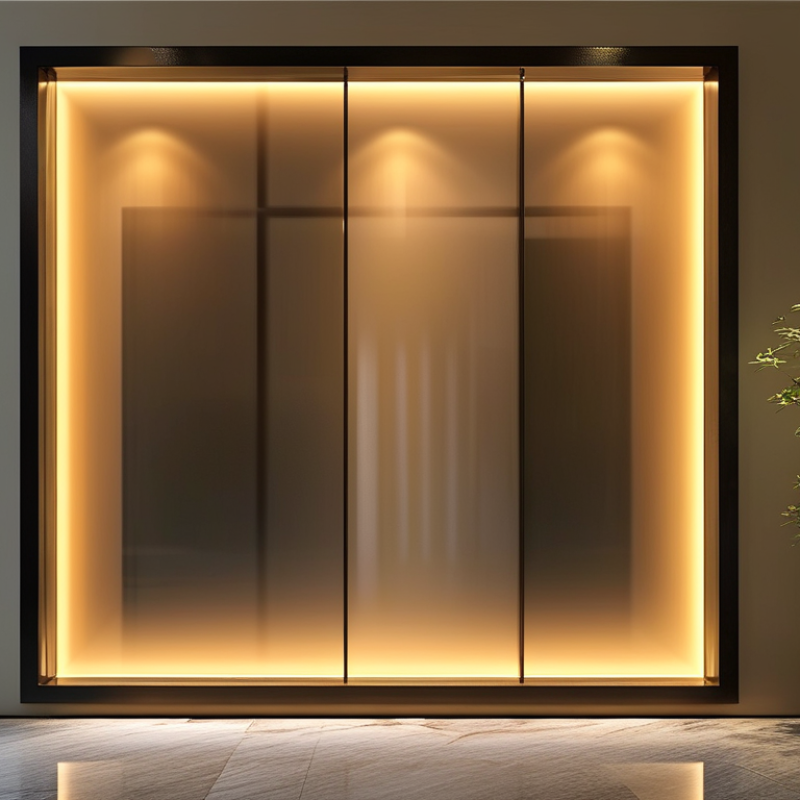
Before choosing an acrylic SEG light box, define the display’s job. Measure the wall, viewing distance, installation height, and daily operating hours. A reception sign viewed from two metres needs different brightness than a retail display seen from ten metres. Record the graphic size, acrylic thickness, frame depth, and available power supply. The U.S. Department of Energy’s 2023 Solid-State Lighting R&D Opportunities report identifies laboratory LED efficacy above 200 lumens per watt, but real installations perform lower. Treat published figures as references, not guarantees.
Light quality matters. Specify target brightness, colour temperature, and acceptable brightness variation across the graphic. For many commercial interiors, 3,500–5,000K provides a clean appearance without feeling excessively blue. Ask for measured uniformity, not only “bright LED” wording. The Illuminating Engineering Society recommends evaluating luminance, glare, and visual comfort together. A brighter box can still look poor if hotspots appear behind the acrylic. It happens.
Your environment sets the remaining requirements. Outdoor or humid locations need suitable sealing, drainage, corrosion-resistant hardware, and verified electrical protection. Request photometric data, thermal testing, power consumption, replacement access, and installation drawings. The U.S. Energy Information Administration reports that LEDs use substantially less electricity than incandescent lighting, yet poor ventilation can shorten component life. My practical preference is a serviceable design with removable access panels. A perfectly slim box may become expensive when technicians must dismantle the entire wall. Leave room for revision; early measurements are often incomplete.
Choosing an acrylic face for an SEG light box requires more than checking its appearance. The acrylic type controls diffusion, clarity, weight, and visual comfort. Opal acrylic spreads LED light evenly and reduces bright spots behind the fabric. Clear acrylic allows stronger transmission, but it can reveal LED spacing and create uneven patches. Frosted acrylic offers a middle option when you need softness without losing too much brightness. Samples matter.
Thickness affects both stability and illumination. A 2 mm sheet is lightweight and suitable for smaller frames, but it may flex during installation. A 3 mm or 5 mm sheet feels more rigid and resists bending in larger displays. It also adds weight, which can affect the frame and wall fixing. I have seen installers choose thicker acrylic for confidence, then discover that the extra weight complicates handling. More material is not always better.
Light transmission should match the LED layout, viewing distance, and room brightness. High-transmission acrylic may work with widely spaced LEDs, while diffused acrylic is safer when the LEDs sit close to the face. Ask for transmission data, but test a real sample with the intended LEDs. Datasheets cannot show every hotspot. Check the panel from several angles, especially at eye level. A slightly lower output with smoother brightness often looks more professional than a brilliant, uneven surface. Industry measurements can guide the decision, but the final judgment should come from an actual illuminated mock-up.
How to Choose an Acrylic SEG Light Box for Your Business?
Frame design determines how evenly an acrylic SEG light box presents your message. Choose an aluminum frame with reinforced corners and accessible wiring channels. A slim profile looks elegant, but may reduce space for LED placement and maintenance. Grand View Research valued the global digital signage market at approximately 27.3 billion U.S. dollars in 2022, with continued growth expected through 2030. This growth reflects stronger demand for bright, changeable displays, but market estimates vary by definition. Check the internal depth, LED spacing, and heat ventilation before ordering. Small details matter.
Fabric graphics need dense stitching, stable tension, and accurate silicone edging. A fabric that stretches unevenly can create wrinkles near the acrylic surface. Ask for color-management information and a washable, flame-resistant textile specification. The U.S. Department of Energy’s 2023 SSL Technology Status Report notes that modern LED systems can exceed 150 lumens per watt under suitable conditions. Higher efficacy may reduce energy use, though real performance depends on drivers, spacing, and operating hours. Test a printed sample under the actual LEDs. Never trust only a screen preview.
Installation method should match the wall, ceiling, and replacement frequency. Wall-mounted units need reliable anchors, concealed cables, and enough clearance for service access. Freestanding displays require a wider base to resist accidental movement. For suspended units, confirm load ratings with a qualified installer. I have seen attractive frames fail because installers rushed the leveling stage. That mistake is easy to underestimate. Document the assembly sequence, inspect every corner, and leave room for future graphic changes.
| Evaluation Dimension | Option or Specification | Typical Data | Business Benefit | Potential Limitation | Recommended Use |
|---|---|---|---|---|---|
| Frame Design | Single-sided wall-mounted frame | Approx. 80–120 mm overall depth; rear LED illumination | Uses less wall space and is suitable for corridors, reception areas, and retail walls. | Graphics are visible from one primary viewing direction only. | Best for indoor wall branding and menu displays. |
| Frame Design | Double-sided hanging frame | Approx. 120–200 mm overall depth; illumination on both sides | Provides visibility from two directions and can improve wayfinding in open spaces. | Requires secure ceiling support and more electrical or structural planning. | Best for retail aisles, airports, showrooms, and trade-fair entrances. |
| Frame Design | Freestanding floor frame | Common height range: 1,800–2,400 mm; weighted or bolted base required | Can be relocated more easily than a permanently wall-fixed display. | Needs floor space and may require anti-tip measures in busy areas. | Best for temporary campaigns, lobbies, and promotional zones. |
| Acrylic Face | Clear acrylic protective face | Typically 2–5 mm thick, depending on panel size and support design | Protects the graphic or light source from dust and accidental contact while maintaining a clean appearance. | Can reflect surrounding light and may show scratches if cleaned with abrasive materials. | Suitable for high-contact indoor locations. |
| Acrylic Face | Opal or diffusing acrylic face | Typical light-diffusing sheet thickness: 2–5 mm | Helps distribute LED light more evenly and reduces visible bright spots. | May slightly soften image contrast compared with a clear face. | Best when uniform illumination is more important than maximum contrast. |
| Fabric Graphic | Dye-sublimated polyester fabric with silicone edge | Common fabric weight: approximately 200–260 g/m²; silicone gasket sewn into the perimeter | Lightweight, foldable, and designed for quick graphic replacement without tools. | Requires accurate sewing and correct graphic tension to avoid wrinkles. | Best for frequently updated campaigns and modular displays. |
| Fabric Graphic | Front-lit fabric graphic | Typically uses a white or light-colored textile surface for front illumination | Produces strong printed color and is generally easy to photograph. | Light distribution can appear uneven if the frame is too shallow or LEDs are poorly spaced. | Best for shallow frames and standard indoor advertising. |
| Fabric Graphic | Backlit fabric graphic | Requires translucent fabric and sufficient spacing between LEDs and graphic surface | Creates a bright, illuminated visual that remains readable in dim environments. | Poorly prepared artwork or insufficient diffusion may produce hotspots. | Best for premium branding, exhibitions, and low-light interiors. |
| Lighting | LED illumination | Typical color temperature: 3,000–6,500 K; actual brightness depends on LED layout and diffuser | Provides lower heat output and longer service potential than traditional fluorescent systems. | Brightness and color consistency vary with LED quality, spacing, and power supply design. | Choose a neutral white range around 4,000–5,000 K for general commercial graphics. |
| Graphic Size | Large-format SEG panel | Recommended to divide very wide displays into manageable sections; individual panel widths often remain below 1,500 mm for easier handling | Reduces shipping, handling, and installation difficulty while simplifying graphic replacement. | Panel divisions can create visible seams if frame alignment is inaccurate. | Best for walls wider than a standard single-panel display. |
| Installation Method | Wall mounting with cleat or bracket system | Requires level wall fixing points and suitable anchors for the wall substrate | Provides a stable, professional installation with minimal floor obstruction. | Installation position is less flexible after drilling and anchoring. | Best for permanent retail, office, and reception installations. |
| Installation Method | Ceiling suspension using cables or rods | Requires load-rated attachment points and concealed or planned power routing | Improves visibility above partitions and allows two-sided communication. | Must comply with building, fire-safety, and overhead-load requirements. | Best for open-plan stores, showrooms, and exhibition halls. |
| Installation Method | Tool-free SEG assembly | Silicone graphic edge is inserted into a recessed frame channel; access is normally from the front | Enables fast graphic changes and reduces labor for routine campaign updates. | Incorrect insertion order or excessive tension may cause corner puckering. | Best for businesses with frequent seasonal or promotional changes. |
| Maintenance | Replaceable graphic and accessible LED modules | Front-access or removable-frame construction is preferred for serviceability | Allows the business to update artwork or repair lighting without replacing the entire unit. | More accessible construction may increase the initial frame cost. | Best for long-term installations with planned content updates. |
| Decision Priority | Balanced selection for most indoor businesses | Aluminum SEG frame, diffusing acrylic face, backlit polyester fabric, front-access service, and wall or floor installation matched to the site | Balances appearance, changeability, maintenance access, and installation practicality. | Final performance depends on site dimensions, viewing distance, ambient light, and electrical design. | Use as a starting specification, then confirm structural, electrical, and fire-safety requirements. |
Illumination quality should guide your decision. A bright panel can still look uneven. Inspect the acrylic surface from several angles. Look for dark corners, visible LED points, and glare near eye level. Ask for a lighting test report, not only a lumen number. A high color rendering index helps products and printed graphics appear more natural. For most retail displays, neutral white light often balances clarity and comfort. However, your brand atmosphere may need warmer or cooler color temperatures. View a sample in your actual space. Showrooms can be misleading.
Energy use affects operating costs every day. Compare watts per square meter, not just total wattage. Efficient LEDs should provide consistent brightness without excessive heat. A dimming function or timer can reduce consumption during quiet hours. Check the power supply’s efficiency and ventilation requirements. Tight frames may trap heat, shortening component life. I have seen installations chosen for low purchase cost but replaced early. That mistake is easy to repeat.
Safety deserves equal attention. Choose a low-voltage system with suitable electrical certification for your installation region. Confirm grounding, cable protection, and secure strain relief. The frame should support the acrylic panel without sharp exposed edges. Check whether the SEG fabric and surrounding materials have appropriate flame-resistance documentation. Ask about thermal testing and replacement procedures. Do not assume a slim light box is automatically safe. It is not. Leave enough access for inspection, even if that slightly changes the design.
How to Choose an Acrylic SEG Light Box for Your Business?
Customization should begin with the viewing distance, not the frame color. Acrylic faces can create a clean, bright finish, while SEG fabric supports quick graphic changes. Check exact panel dimensions, edge tolerances, and lighting zones before approving artwork. A 2024 Grand View Research report forecasts strong growth in the global digital signage market, driven by flexible, high-impact displays. That growth does not make every light box suitable. Your wall, ceiling height, and message frequency still matter.
Durability affects the real cost. Ask for acrylic thickness, LED module quality, heat management, and replaceable power components. Acrylic may resist daily handling, but it can scratch during careless installation. Poor ventilation may also shorten LED life. The U.S. Department of Energy reports that LED lighting can use at least 75% less energy and last up to 25 times longer than incandescent lighting. However, that comparison does not remove maintenance costs. Request photometric data, warranty terms, spare-part pricing, and a written energy estimate. A low quote can become expensive after repeated graphic changes or difficult repairs. I have seen buyers focus too heavily on the first invoice.
Tips: Compare three quotes using the same size, brightness, warranty, and installation scope. Test one corner sample under your actual store lighting. Confirm whether replacement fabric, acrylic panels, and power supplies are locally available. Leave room for imperfect measurements; walls are rarely as straight as drawings suggest.
Customization, durability, and estimated three-year ownership cost for a 1 m² light box.
Thicker acrylic generally supports more demanding custom shapes and offers better impact resistance, but it increases the initial material cost. The estimates assume 12 hours of daily operation for three years, a 60-watt LED system, electricity at $0.16 per kWh, and routine maintenance reserves. Actual costs vary with size, cut-outs, printing, installation, and local energy prices.