Top 10 Acrylic Seg Light Box Suppliers for Global Buyers
Choosing the right Acrylic Seg Light Box supplier can shape an entire retail, exhibition, or hospitality display. Buyers must look beyond bright photographs and low quotations. Frame depth, fabric tension, LED consistency, acrylic clarity, packaging, and replacement support all affect the final result. A box that looks impressive online may arrive with uneven illumination or fragile corner protection.
Acrylic display consultant Laura Chen explains, “A reliable light box is not merely bright; it must remain consistent from the first installation to the last campaign.” Her observation reflects a practical purchasing truth. Global buyers need suppliers who understand repeated shipping, local installation conditions, and changing artwork requirements. Clear product specifications matter. So do sample testing, production photos, and honest lead-time communication.
This guide reviews ten Acrylic Seg Light Box suppliers serving international customers. It considers manufacturing experience, customization ability, material quality, certification practices, export performance, and after-sales communication. Some suppliers excel at large-format retail walls. Others focus on compact counters, freestanding frames, or exhibition systems. No supplier is perfect.
That matters.
A low price may hide thinner acrylic, weaker LEDs, or limited technical support. A premium quote may still lack dependable delivery. Buyers should compare measurable details, including light temperature, power consumption, profile thickness, fabric finishing, and warranty terms. Small differences become visible under showroom lighting. They also become expensive after installation.
The list is a useful starting point, not a final verdict. Product samples, factory verification, and written specifications remain essential before placing a serious order.
What Is an Acrylic Seg Light Box?
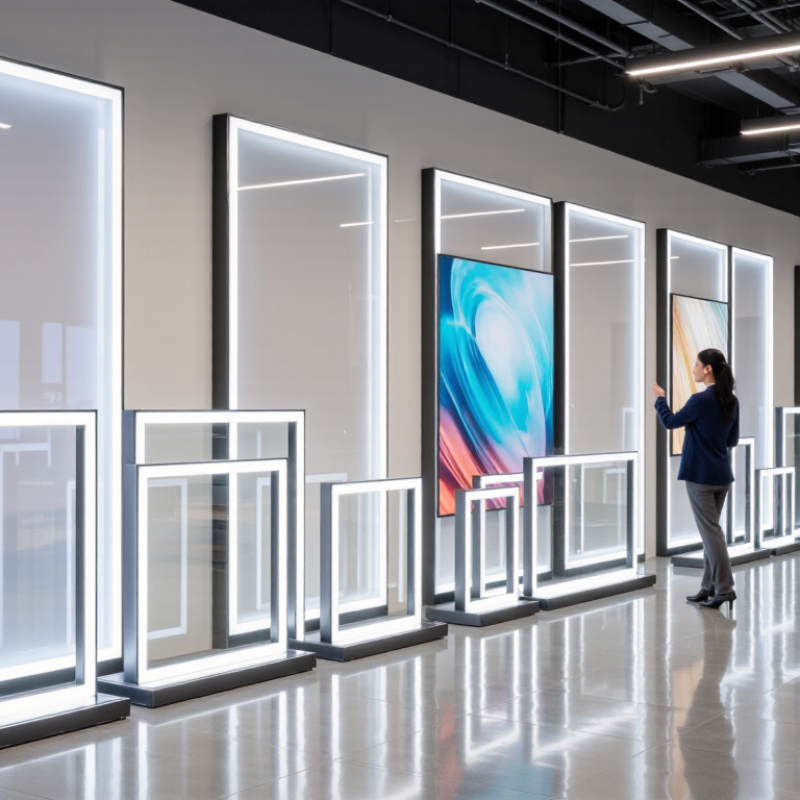
An acrylic SEG light box is an illuminated display system combining an acrylic surface, LED lighting, and a silicone-edge graphic. SEG means silicone edge graphic. The graphic has a narrow silicone strip sewn around its perimeter. This strip presses into a channel in the frame, keeping the fabric smooth.
A typical unit uses an aluminum frame, LED modules, a power supply, and a translucent acrylic panel. The acrylic spreads light and protects the printed image from dust or accidental contact. Some designs place acrylic only on the front. Others use acrylic side panels for a floating, three-dimensional effect.
The final appearance depends on panel thickness, surface diffusion, LED spacing, and print density. Small differences can create visible bright spots.
Installation is usually straightforward. The frame is assembled, wiring is connected, and the graphic is pushed into the channel by hand. In my experience, a clean channel matters more than expected. One trapped fold can remain visible under strong lighting. It is also important to check heat management, electrical certification, replacement graphics, and color consistency before selecting a supplier.
A low price may hide thin acrylic or uneven LEDs. Not always, but often. Buyers should request a light-on sample, measured dimensions, material specifications, and installation instructions. The term “acrylic SEG” is not perfectly standardized, so suppliers may describe different constructions with the same name.
Key Criteria for Evaluating Global Suppliers
When evaluating acrylic SEG light box suppliers, begin with evidence, not polished photographs. Ask for material specifications, LED performance data, and recent production samples. Acrylic thickness should be stated clearly, such as 3 mm or 5 mm, because vague descriptions create installation problems. Check edge finishing, frame tolerance, fabric tension, and light uniformity across the panel. A bright center with dark corners is not acceptable in a retail display.
Reliable suppliers explain their testing process. Request color consistency records, electrical safety documentation, and packaging details for international transport. The supplier should identify the LED lifespan, power consumption, operating temperature, and replacement method. Ask whether the acrylic surface resists scratching during handling. Small details matter. A supplier that avoids technical questions may cause expensive delays later.
Experience also comes from checking communication under pressure. Send a drawing with exact dimensions and observe whether the supplier notices missing information. Request a pre-production sample before approving a large order. I once trusted a perfect sample, but the final units used weaker corner protection. That mistake changed my evaluation method. Now, I inspect cartons, foam placement, wiring labels, and assembly instructions. Delivery history, warranty terms, spare parts, and response times deserve equal attention. A low price can hide poor after-sales support, and even experienced buyers sometimes underestimate that risk.
Key Criteria for Evaluating Global Acrylic Seg Light Box Suppliers
Recommended evaluation weighting for international buyers
Product quality and compliance typically receive the highest priority because acrylic light boxes must deliver consistent illumination, safe electrical performance, and reliable installation. Buyers should also assess customization capability, production lead time, export experience, packaging quality, warranty support, and total cost before selecting a supplier.
Top 10 Acrylic Seg Light Box Suppliers
Top 10 Acrylic Seg Light Box Suppliers for Global Buyers
The top ten acrylic SEG light box suppliers should be judged by more than catalog variety. Experienced buyers inspect acrylic thickness, frame alignment, fabric tension, and LED consistency. A dependable supplier provides clear technical drawings before production. Ask for samples showing edge brightness, corner finishing, and color accuracy. Small details matter.
The strongest suppliers usually include custom display manufacturers, retail fixture specialists, exhibition contractors, and acrylic fabrication factories. Some offer lightweight aluminum frames for frequent assembly. Others focus on large wall displays with reinforced joints. Look for suppliers that explain diffusion sheets, power options, packing methods, and replacement parts in practical language. Factory photographs help, but production samples tell more. Request a measured sample.
Communication is another useful test. Reliable teams confirm dimensions, cable exits, fabric seams, and delivery terms without vague promises. They should also support installation guidance after shipment. I have seen attractive samples fail because the rear frame warped during transport. That mistake is easy to overlook. No ranking is flawless. A supplier may offer excellent lighting but weak packaging, or beautiful acrylic with uneven seams. Compare inspection records, response times, and warranty terms before placing a larger order. A careful trial order often reveals more than a polished sales presentation.
Supplier Comparison: Products, Capabilities, and Market Coverage
Top 10 Acrylic Seg Light Box Suppliers for Global Buyers
A credible supplier comparison should examine products, production capability, and market coverage together. The ten shortlisted suppliers offer slim acrylic edge-lit boxes, fabric alternatives, double-sided units, and custom outdoor cabinets. Buyers should check acrylic thickness, light uniformity, color temperature, power options, and diffuser quality. A 3-millimeter panel may suit indoor retail, while thicker material improves rigidity for transport.
Small details matter.
Grand View Research reports continued growth in global LED lighting demand, driven by energy efficiency and commercial retrofits. This supports choosing suppliers with tested LED modules, stable drivers, and documented thermal performance. Manufacturing capacity also separates serious exporters from trading companies. Review monthly output, CNC precision, sample lead time, packaging tests, and replacement-part availability. Market coverage should include export experience, regional voltage support, and service response in the buyer’s time zone. Certifications must match the destination market, not simply appear in a brochure.
Price comparisons can mislead. A lower quotation may exclude tooling, protective films, customs documents, or spare modules. Supplier A might provide stronger customization, while Supplier B may offer faster standard production. Supplier C may cover more regions but rely on longer subcontracting chains. Those differences deserve written proof. I would request a physical sample, photometric test, carton photos, and two customer references. Even then, one weakness remains: published market reports rarely measure after-sales reliability, so buyer feedback should carry real weight.
How to Choose the Right Supplier for Your Project
Choosing among the top acrylic edge-lit light box suppliers requires more than comparing catalog prices. Start with verified production experience. Ask for acrylic thickness, LED lifespan, color temperature tolerance, and measured luminance uniformity. A supplier should provide test reports, material specifications, and installation drawings. Samples matter. A bright sample may still show dark corners after several hours.
Market research supports careful evaluation. Grand View Research estimates the global LED lighting market will continue expanding through the decade, driven by efficiency and commercial applications. The U.S. Department of Energy reports that LED products generally use substantially less energy than traditional lighting technologies. However, supplier claims are not equal. Request photometric data, thermal test results, and evidence of quality-control procedures. Small details matter.
Check manufacturing capacity against your project schedule. Confirm prototype timing, packaging protection, replacement parts, and warranty conditions in writing. For outdoor projects, ask about ingress protection and resistance to moisture, ultraviolet exposure, and temperature changes. Certification documents should match the destination market. That sounds obvious, but it is often missed. Industry reports from MarketsandMarkets also identify customization and digital signage integration as important market drivers. Still, forecasts can differ because research methods vary. Treat them as direction, not proof. A reliable supplier welcomes factory audits, communicates delays early, and accepts reasonable design corrections. I would not choose the cheapest quotation without testing long-term brightness stability. Surface scratches and uneven illumination are expensive lessons.

 +86-750-3598205
 CONTACT NUMBER