+86-750-3598205


Choosing the right display technology can shape how customers notice, remember, and trust your business. A Led Display Screen offers bright, dynamic communication in places where printed signs may fade into the background. It can present promotions, directions, event schedules, product videos, or real-time announcements with clear visual impact.
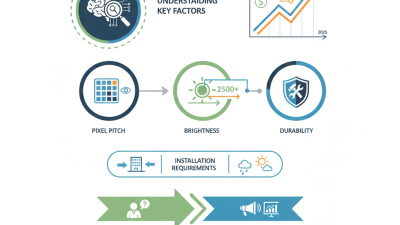
The strongest results come from practical planning. Screen brightness should match the installation environment, especially when sunlight reaches a storefront or outdoor wall. Pixel pitch matters too. A close viewing distance requires finer detail, while a larger screen viewed from across a street may need a different specification. Reliable businesses also examine weather protection, ventilation, mounting safety, remote content control, warranty coverage, and local maintenance support before purchasing.
Small details matter.
In real commercial installations, content quality often determines whether the screen feels useful or distracting. Short messages, readable fonts, strong contrast, and scheduled updates usually perform better than crowded designs. An experienced supplier should explain these choices clearly and provide documented technical specifications. Independent reviews, safety certifications, and a transparent service agreement can further support a responsible decision.
Still, LED is not automatically the best answer. High upfront costs, power requirements, installation limits, and ongoing repairs may challenge smaller businesses. A poorly selected screen can become an expensive mistake. Reviewing audience distance, operating hours, budget, and business goals helps prevent that outcome. When technology matches the location and message, a Led Display Screen can become a dependable communication asset rather than a temporary visual attraction.
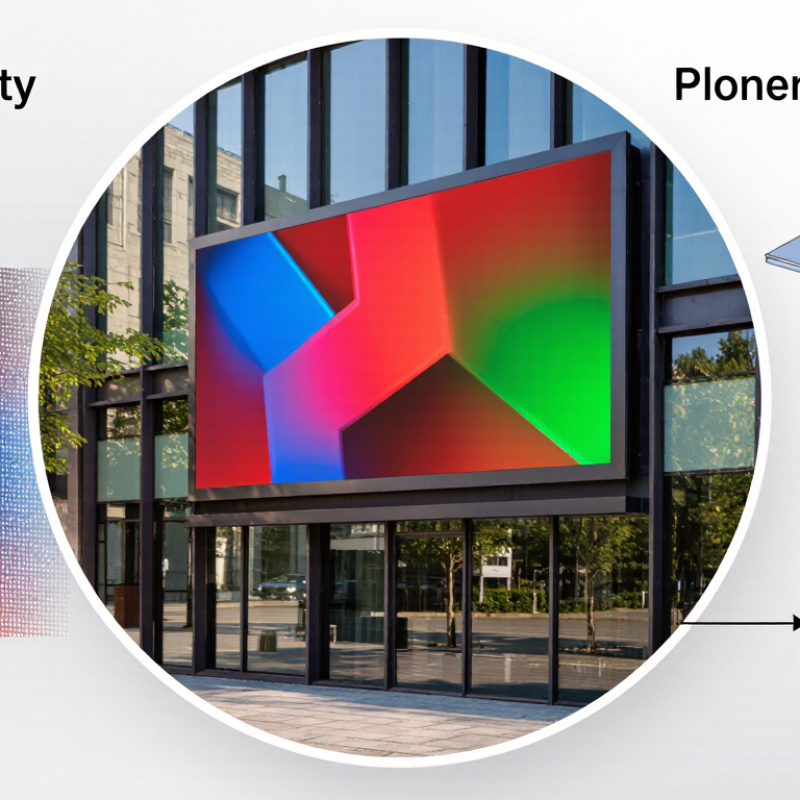
An LED display screen is a modular visual surface built from light-emitting diodes. Each pixel usually combines red, green, and blue sub-pixels. By adjusting their intensity, the display produces colors, images, and motion. Unlike a projector, it creates light directly, so daylight readability can remain strong when brightness is calibrated correctly. Grand View Research valued the global LED display market at about USD 7.1 billion in 2023. Its analysis connects growth with retail, transport, sports, and corporate communication.
Behind the image, a sending controller converts video signals into data packets. Receiving cards distribute those packets across cabinet modules. Pulse-width modulation controls how long each diode stays active during a refresh cycle. Higher refresh rates can reduce camera flicker. Pixel pitch affects viewing distance and image detail. MarketsandMarkets projected growth from roughly USD 7.4 billion in 2023 to USD 13.7 billion by 2028. Forecasts are useful, but not promises.
For a business, the practical choice depends on viewing distance, ambient light, content speed, and maintenance access. A fine-pitch screen may look elegant near a reception desk, yet cost and heat can rise. Specifications are often treated as guarantees. They are not. Installation quality, ventilation, calibration, and content design still shape the result. The U.S. Department of Energy notes that LED efficiency varies by product and operating conditions. “LED” alone does not define performance.

LED display screens are valuable where business information must stay visible, timely, and easy to update. Retail stores can place bright product walls near entrances, checkout areas, and seasonal displays. These screens can show prices, promotions, directions, and short product demonstrations. Grand View Research’s 2024 Digital Signage Market report forecasts an 8.1% compound annual growth rate through 2030. That trend reflects growing demand for flexible customer communication.
In hotels and restaurants, LED screens can display menus, event schedules, lobby announcements, and wayfinding content. Transport hubs can use them for platform information, service updates, and emergency instructions. Offices may use fine-pitch screens in reception areas, meeting rooms, and control centers. The U.S. Department of Energy reports that LED lighting uses at least 75% less energy than incandescent lighting and can last up to 25 times longer. Display systems still require careful brightness and power planning.
Outdoor venues and education facilities also benefit from large-format LED walls. They support event content, campus notices, public information, and live presentations. In practice, a screen is not automatically effective. I have seen overly bright displays waste energy and make text difficult to read. Content can also become repetitive. Screen size, pixel pitch, viewing distance, weather protection, and maintenance access should be assessed before installation. A modest screen with useful content may outperform a much larger one.
LED display screens give businesses a visible voice, especially where customers move quickly. Bright images remain readable in daylight, while motion can explain an offer within seconds. MarketsandMarkets projects the global digital signage market will grow from $27.3 billion in 2023 to $40.7 billion by 2028. That growth reflects stronger demand for flexible, measurable communication.
A well-planned LED screen can update prices, menus, schedules, or promotions without printing new materials. Content teams can change several screens from one control point. This reduces operational delays. Outdoor Advertising Association of America data reported $9.1 billion in U.S. out-of-home advertising revenue during 2023. LED technology helps businesses use these high-traffic environments with more creative control.
Energy use still deserves careful attention. The U.S. Department of Energy reports that LED lighting can use up to 75% less energy than incandescent lighting, although display power depends on brightness, size, and operating hours. That distinction matters. Poorly calibrated screens may waste electricity and create uncomfortable glare. Installation also requires suitable viewing distance, ventilation, weather protection, and maintenance access. A screen beside a sunny storefront needs different specifications from one inside a quiet reception area. Bigger is not always better. Businesses should test brightness at different times, track audience response, and review running costs after installation. The screen may attract attention, but useful content earns trust.
| Business Advantage | Key Data Dimension | Typical LED Display Performance | Business Value | Planning Consideration |
|---|---|---|---|---|
| High Visibility | Brightness | Indoor: approximately 500–1,500 nits Outdoor: approximately 5,000–10,000 nits |
Content remains readable in bright indoor environments and direct outdoor daylight when the display is correctly specified. | Brightness should be selected according to viewing conditions; excessive brightness may increase power consumption and cause visual discomfort. |
| Flexible Viewing | Viewing angle | Commonly approximately 120°–160° horizontally, depending on LED package and display design | More people can view the message from different positions without requiring a perfectly front-facing location. | Actual viewing performance depends on pixel technology, installation angle, distance, and content contrast. |
| Long Service Life | Rated operating life | Approximately 50,000–100,000 hours to a reduced-brightness level, depending on operating conditions | Supports long-term signage, wayfinding, promotional, and information-display applications. | Heat management, humidity, operating brightness, power quality, and maintenance practices affect service life. |
| Dynamic Content | Content update time | Usually seconds to minutes when connected to a compatible content-management system | Businesses can update prices, schedules, promotions, alerts, and announcements without replacing printed materials. | Update speed depends on network connectivity, software workflow, user permissions, and approval procedures. |
| Visual Impact | Refresh rate | Common commercial configurations: approximately 1,920–3,840 Hz | Higher refresh rates help reduce visible flicker and scanning artifacts in video content and camera recordings. | Refresh rate should be matched with camera use, video requirements, and the display controller. |
| Scalable Installation | Display size and aspect ratio | Modular panels can be combined into small, large, curved, or custom-format screens | Allows the same display concept to be adapted for storefronts, reception areas, stages, control rooms, and public spaces. | Structural support, power distribution, pixel pitch, maintenance access, and installation regulations must be assessed in advance. |
| Appropriate Image Detail | Pixel pitch | Approximately 0.9–10 mm in many commercial applications | Different pixel pitches allow businesses to balance image detail, viewing distance, and project cost. | Smaller pixel pitches are generally suited to closer viewing distances but may increase initial cost and processing requirements. |
| Reduced Material Waste | Message replacement method | Digital content can be changed electronically without producing new posters, banners, or printed panels | Supports reusable messaging and can reduce the recurring material and disposal needs associated with frequently changed print campaigns. | Environmental benefits depend on electricity use, display lifetime, content-change frequency, and responsible equipment recycling. |
| Operational Reliability | Environmental protection | Indoor and outdoor-rated configurations are available; outdoor products commonly use IP-rated enclosures | Weather-protected solutions can support outdoor advertising, transport information, sports venues, and public-facing installations. | Choose the enclosure rating, thermal design, and corrosion protection for the actual location and local climate. |
| Energy Management | Power consumption | Varies significantly by pixel pitch, brightness, cabinet size, content, and operating mode; power specifications should be reviewed as average and maximum values | Brightness scheduling, automatic dimming, and timed operation can help control energy use during low-traffic or nighttime periods. | Use the manufacturer’s project-specific average and maximum power data when calculating operating costs; do not rely only on peak ratings. |
| Maintenance Efficiency | Serviceability | Many modular systems allow individual modules, power supplies, or receiving components to be replaced | Component-level maintenance can reduce downtime compared with replacing an entire display surface. | Confirm spare-parts availability, front or rear access, diagnostic tools, and technician response procedures before purchase. |
| Data note: The figures shown are typical industry ranges for commercial LED display systems rather than guarantees for every product. Actual performance depends on display architecture, installation environment, operating schedule, content, maintenance, and local electrical requirements. | ||||
Why Choose LED Display Screens for Your Business?
How Should Businesses Choose the Right LED Display Screen?
Choosing an LED display starts with the viewing distance, not the largest available cabinet. A storefront viewed from eight meters may need a 6–10 mm pixel pitch. A reception screen viewed from two meters usually needs a finer pitch. Measure the site carefully. A brighter screen is not always better.
Outdoor displays must handle sunlight, rain, dust, and temperature changes. Check brightness, IP protection, ventilation, and front or rear maintenance access. For indoor use, excessive brightness can cause eye strain and waste electricity. The U.S. Department of Energy reports that LED technology can deliver high efficacy, but real savings depend on operating hours, brightness settings, and control systems. That detail is easy to overlook.
Business buyers should also compare refresh rate, color consistency, warranty terms, spare parts, and content compatibility. MarketsandMarkets’ 2024 LED display research projects continued market growth through 2029, reflecting stronger demand for commercial visual communication. Growth alone, however, does not prove suitability. Ask for measured power consumption, not an ideal figure. Request a live demonstration with your own video files. A low-cost screen may become expensive when modules, labor, or specialist access are difficult to replace. Service planning is unglamorous. It often decides the real return on investment.
LED displays provide high brightness, flexible screen sizes, long operating life, and dynamic content control. Selecting the right pixel pitch is essential because smaller pixel pitches are designed for closer viewing distances, while larger pitches are more suitable for distant audiences.
Planning guideline: the approximate minimum viewing distance in meters is often similar to the pixel pitch in millimeters. Final selection should also consider brightness, ambient light, installation location, viewing angle, content type, weather protection, and maintenance access.
LED display screen costs depend on more than the cabinet price. Screen size, pixel pitch, brightness, and viewing distance strongly affect the budget. A fine pixel pitch creates sharper images, but it usually costs more.
Outdoor screens need higher brightness and stronger weather protection. Indoor screens may require less power and simpler housing.
Installation can also change the final cost. Mounting structures, electrical upgrades, control systems, transport, and labor are easy to overlook. A low upfront quote can look attractive. It can also be misleading.
Ask whether the estimate includes permits, lifting equipment, content software, and future repairs. Local climate matters too. Dust, heat, rain, and salt air can shorten component life.
Maintenance protects both image quality and operating costs. Technicians should inspect power supplies, cables, cooling fans, and waterproof seals regularly. Loose connections may create dark modules or flickering lines.
Routine cleaning prevents dust from blocking ventilation. Keep spare modules and receiving cards available. This reduces downtime during busy sales periods. Remote monitoring can identify unusual temperatures or power changes early.
However, maintenance plans are not always perfect. Some problems appear after severe weather or unexpected electrical faults. A practical budget should include energy use, periodic inspections, replacement parts, and technician access over several years.